How it works

How It Works

Warmth from the Ground Up

Floor heating, also known as underfloor heating (UFH), is a modern, energy-efficient way to heat your home or commercial space. Unlike traditional heating systems that warm the air from a single point (like a radiator), floor heating provides consistent, even heat across the entire floor surface.


01

Plan & Prepare

  • Assess the space and choose the right system.
  • Clean and level the subfloor.
  • Design a layout to ensure even heat distribution.
02

Install Insulation

  • Add insulation boards or foil to prevent heat loss.
  • Helps the system heat up faster and use less energy.
03

Lay the Heating System

  • Electric: Install heating mats or cables on the floor surface.
  • Hydronic: Lay flexible water pipes connected to a manifold.
04

Test the System

  • Check the system for proper function before covering.
  • Pressure or resistance testing ensures safety and reliability.
05

Cover with Screed or Leveling Compound

  • Apply a thin screed (hydronic) or self-leveling compound (electric).
  • Let it cure completely before flooring goes on top.
06

Install Flooring & Power Up

  • Lay your final floor finish: tile, wood, vinyl, etc.
  • Connect the thermostat and test the system after everything is complete.
Floor Heating

Types of floor heating systems

Underfloor heating is a modern and energy-efficient way to warm your home by heating the floor from beneath. Instead of relying on traditional radiators, this system creates an even, comfortable warmth throughout the space — from the ground up.
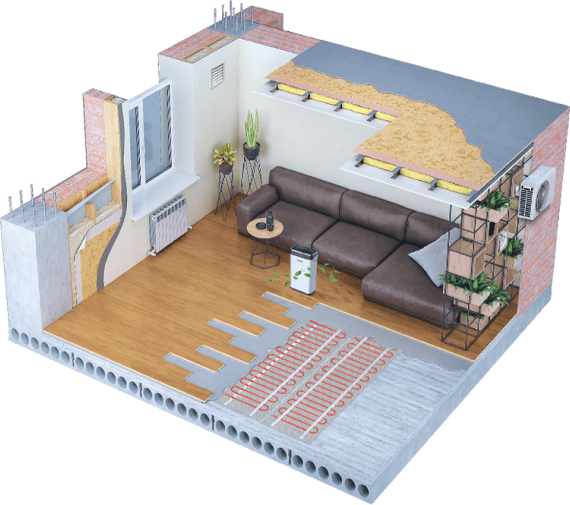

Electric Floor Heating

  1. A layer of insulation is laid to prevent heat loss.
  2. Electric cables or pre-spaced mats are laid out over the subfloor.
  3. A thermostat and temperature sensor are installed.
  4. The floor is covered with tiles, laminate, or another suitable material.
  5. The system is connected to your electrical supply.

Hydronic Floor Heating

  1. Insoation is laid to keep the heat directed upwards.
  2. PEX or similar pipes are installed in loops across the subfloor.
  3. Pipes are connected to a central manifold, which manages water flow.
  4. A layer of screed (concrete) is poured to encase the pipes.
  5. The final flooring is laid once the screed has cured.
ChatBot